They're basing their case on the 14th Amendment, which addressed slavery
by guaranteeing all persons equal protection under the law, and since
corporations are people, well...
But what about the equal protection rights of the people who work in
these businesses? Our historical research has found that the drafters of
the Fourteenth Amendment were very interested in employer-employee
relations, and in particular, whether workers could earn "fair, living
wages." That phrase doesn't come from some union organizer or activist
in Seattle: it comes from Senator Jacob Howard, a staunch Republican who
was the Fourteenth Amendment's Senate floor manager back in 1866, and
whose statements on the concerns motivating the Fourteenth Amendment are
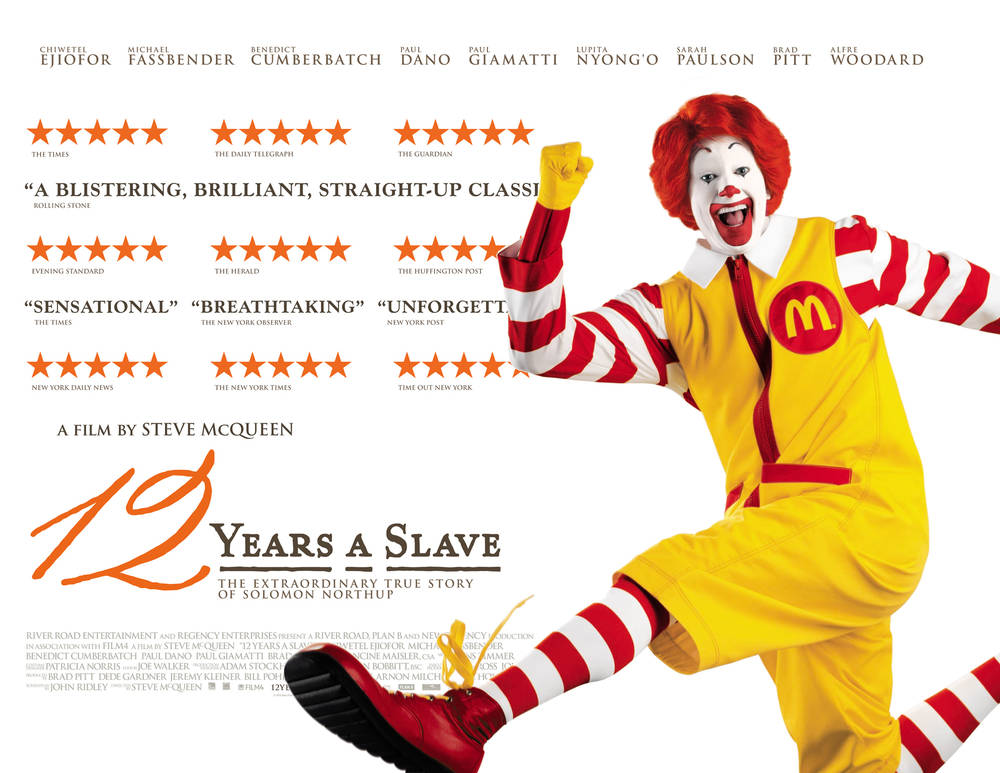
a little more important than the legal opinions of Grimace and Captain
Crook. And during the Congressional hearings documented in the official
report of the committee that proposed the amendment, Senator Howard
asked over and over whether employers would pay "fair, living wages." Of
course, a living wage wasn't the only concern behind the Fourteenth
Amendment. But, unlike protection of the franchised business model, it
was definitely part of the overall goals.
Given how important the idea of "fair, living wages" was to the authors
of the Fourteenth Amendment, it's shameful for the McNugget Buddies to
claim that the Constitution's Equal Protection Clause should protect
them, rather than real human workers with families to feed. But it's not
surprising. Ever since the Fourteenth Amendment was passed, corporate
lawyers have tried to leverage it into a racket to strike down laws like
Seattle's. In 1938, a frustrated Supreme Court justice complained that
"of the cases in [the] Court in which the Fourteenth Amendment was
applied during the first fifty years after its adoption, less than
one-half of 1 percent invoked it in protection of the negro race, and
more than 50 percent asked that its benefits be extended to
corporations." Just this past year, we've seen the Equal Protection
Clause invoked on behalf of coal companies and multinational
agribusiness conglomerates. And now, the Fry Kids.


No comments:
Post a Comment